Why Fast Menu Updates Matter During Busy Trading Weeks
Fast menu edits help cafes and restaurants react to price changes, sold-out items, and daily specials before confusion reaches the table.
Menus rarely stay accurate for long. A supplier changes costs, a lunch special sells out early, or a seasonal dessert arrives two days before the printed insert is ready. The problem is not only the update itself. It is the lag between reality in the kitchen and what the customer sees on the table. During a busy trading week, that lag creates friction everywhere.
Small delays turn into visible mistakes
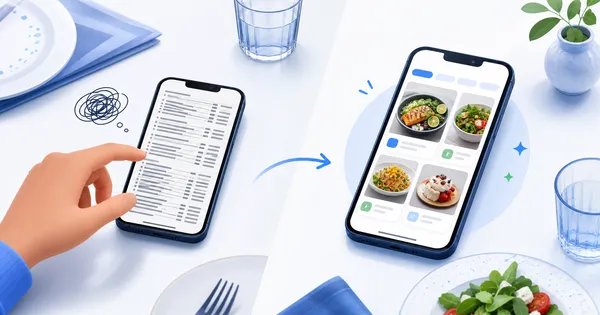
Picture a cafe on a Wednesday morning. Milk costs went up on Monday, but the printed menu still shows the old upgrade price for oat and almond. By noon, staff have repeated the correction twenty times. A guest orders a pastry that sold out an hour ago because the counter sign was not changed quickly enough. Someone scans a QR code, opens a PDF, and still sees last week’s promotion.
These moments seem minor on their own, but they stack up:
- Staff spend time explaining instead of serving
- Customers feel interrupted at the point of decision
- Price trust weakens when what they see is not what they pay
- Specials lose momentum when the menu still favors old items
When service is fast, accuracy becomes part of hospitality.
A digital menu should move at the speed of the shift
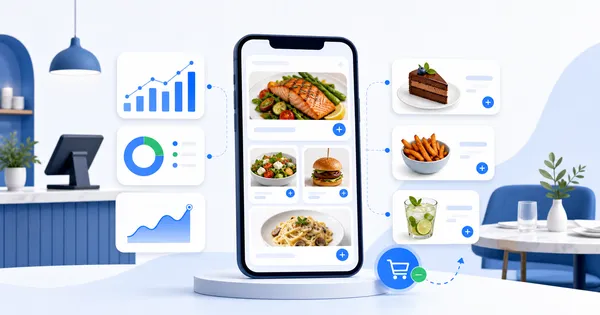
The real benefit of a digital menu is not simply replacing paper. It is shrinking the time between a business decision and the customer’s view of that decision.
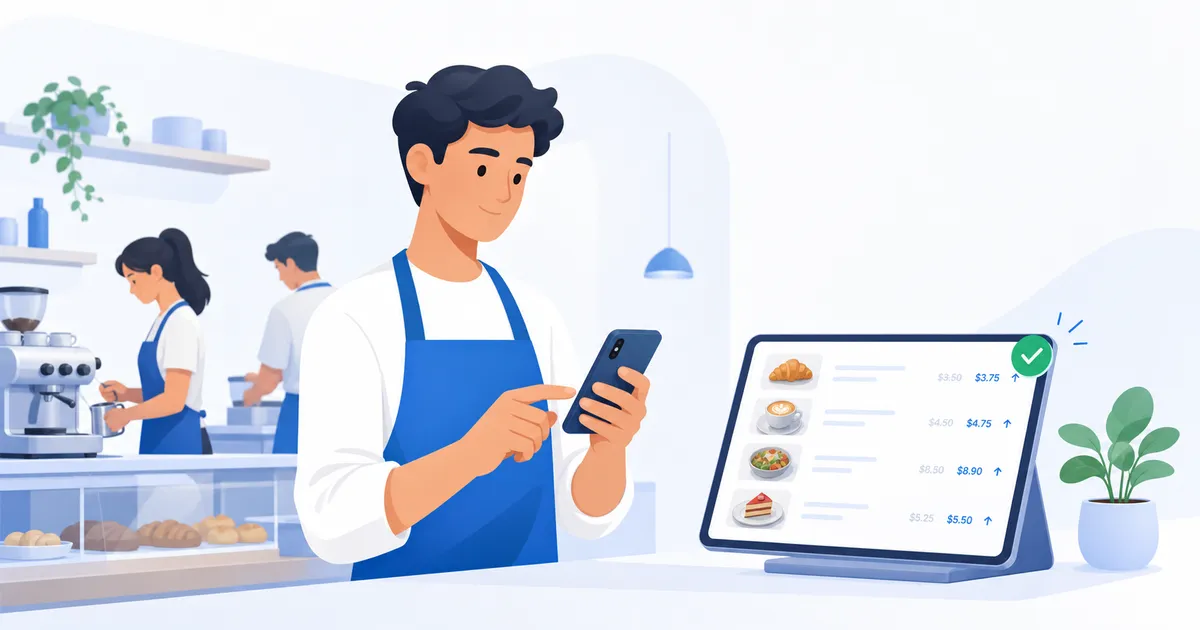
If a brunch spot needs to raise the add-on price for smoked salmon before Saturday service, the update should happen in minutes, not after the next print run. If a takeaway sells through one sauce and wants to push another, the menu should reflect that before evening orders build up. If a dessert counter has six fresh cakes one day and four the next, the menu should match the display without becoming a daily admin burden.
That speed matters because customers now expect current information. They are looking at a phone, not a laminated archive.
Price updates are about confidence, not just convenience
Owners often frame fast editing as a back-office efficiency feature, but customers experience it differently. They read it as competence.
When a menu is current, the ordering flow feels clean. The listed price matches the till. The special appears when it is available. The item that is gone disappears before disappointment reaches the counter. That kind of consistency makes a small venue feel more organised, even when the team is handling a rush.
A menu that stays current protects trust before it protects margin.
Daily trading realities make live edits valuable
Hospitality is full of moving parts that never fit neatly into a monthly print cycle. A few examples show why live menu control matters:
- A bakery switches fillings based on what arrives from suppliers that morning
- A bar adds a high-margin spritz for the weekend and wants it near the top immediately
- A food truck drops one combo because prep ran short before the evening crowd
- A pizzeria removes a topping option after a delivery issue and needs the change visible at once
None of these require a dramatic menu rewrite. They require a menu system that keeps up with operations as they really happen.
Fast updates also reduce awkward staff workarounds
When the menu lags behind, teams invent manual fixes. They tape notes over prices, warn every table about stock issues, or rely on whoever is on shift to remember the latest changes. Those workarounds are tiring, inconsistent, and easy to forget when the queue grows.
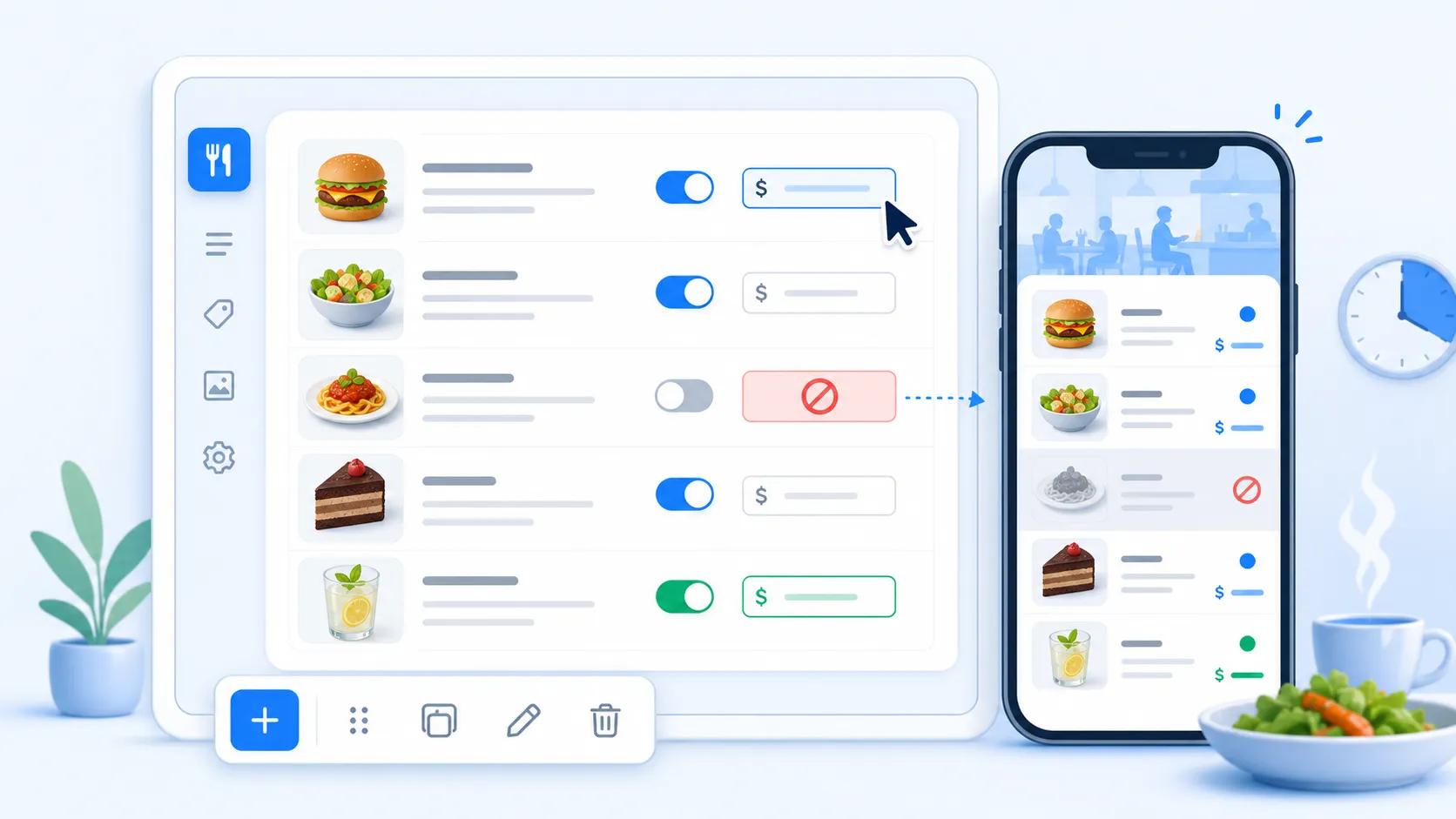
A better system removes that burden. The owner or manager makes the change once, and the live menu reflects it everywhere the QR code is used. That is especially useful for multi-shift teams, smaller venues without dedicated admin staff, and businesses with menus that change more often than customers might expect.
Faster edits let you be more responsive on purpose
There is also an upside beyond avoiding mistakes. When changing the menu is easy, owners are more willing to use it actively.
They can test a lunch bundle on rainy weekdays, promote one slow-moving side with a sharper description, or temporarily feature a better-margin drink near the top of the list. They can react to stock, demand, and seasonality without treating every edit as a project.
That creates a healthier rhythm. The menu becomes an operating tool, not a static document that gets ignored until it is badly outdated.
The best menu is the one customers can trust today
A beautiful menu still causes problems if it reflects yesterday’s conditions. For independent restaurants, cafes, and takeaways, speed of editing is not a technical luxury. It is a practical way to keep pricing, availability, and promotions aligned with real service.
That helps the team move faster, keeps awkward conversations to a minimum, and gives customers a cleaner experience at the exact moment they are deciding what to buy. In a busy week, that is worth more than it sounds.
The businesses that stay sharp are usually the ones that can adjust quickly without making the customer feel the mess behind the scenes.
Update prices in seconds - keep specials, stock changes, and daily pricing aligned with the service you are running right now.